Our engineers design, develop and deploy systems whose architecture follows how the business actually runs: the workflows, the data and the growth the company is planning for. We select an architecture that fits those requirements rather than requiring the business to adopt a vendor’s operating model.
The Accidental-Success Problem
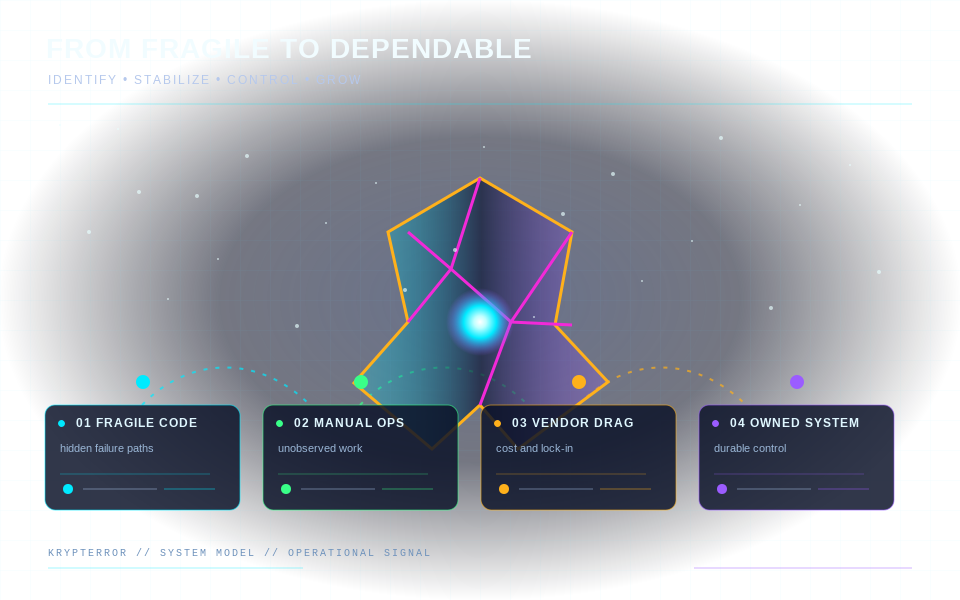
A product can find users before the code, integrations and internal operations are ready. The symptoms are familiar: code merged without review, some of it AI-assisted, manual steps that became permanent, no visibility when things fail, brittle integrations, unclear ownership, and software costs climbing faster than revenue.
Rising software costs create a related problem. Per-seat licenses grow with headcount, customization depends on the vendor’s roadmap and process logic remains on infrastructure the company does not control. Migration costs can keep a business renewing software that no longer fits.
What Changes
We assess the system as it runs, then order the work by how much operational risk each item removes. That may mean hardening a customer-facing service, repairing an integration, building a reporting system you control, replacing a vendor dependency that costs too much, or documenting an architecture that currently depends on one person’s knowledge.
No Reflexive Rewrite
We assess the codebase before recommending a rewrite. Technical debt is addressed in order of risk: we retain working components and replace those that create security problems or excessive operating costs.
Tell us which manual process you want to improve. We will assess the requirements and scope an automation project.
Contact us today