
What You Stop Renting
The commercial stack that grows around a company usually looks the same: a CRM per seat, a helpdesk per agent, an email platform per thousand contacts, an automation tool per task, an analytics product per event, a billing portal per transaction. Each may be reasonably priced individually. Together they create recurring expenses that can grow with headcount or usage without a corresponding increase in revenue.
We select, customize, harden, deploy and integrate open-source or hybrid systems for those same jobs. The scope can include CRM, customer support, email, analytics, billing, identity, automation and internal tooling on infrastructure you control. Where mature options exist, we evaluate them against your requirements and provide the engineering needed to customize, deploy and operate them.
Moving off the subscription also changes who holds the sensitive parts. Customer and operational data stay in systems you operate, so a privacy or compliance question is answered from your own controls rather than a vendor's subprocessors. Workflows and business logic stay in code you own. You set security controls, monitoring and the network boundary to your risk profile and internal standards. Where a regulator requires a certified vendor, that requirement takes priority, as explained below.
- CRM: a self-hosted CRM with your records in your own database, wired into your product and your inbox
- Customer support: a helpdesk and shared inbox you host, connected to the channels you actually answer
- Email and lifecycle messaging: a sending platform you control, with deliverability set up properly rather than guessed at
- Analytics and product metrics: event capture you host, one canonical source of truth, no sampling you did not choose
- Billing and subscriptions: payment flows built directly against your provider, without a portal layer in the middle
- Identity and access: single sign-on, roles and audit trails that fit how your team works
- Internal tooling and automation: the approval chains, dashboards and scheduled jobs currently living in spreadsheets
The Comparison Nobody Publishes
Published subscription prices are only part of the comparison. Use your invoices to estimate which charges ownership would remove, then compare those savings with migration and operating costs:
- What the same capability costs across 24 and 36 months at your current seat count, and again at the headcount you expect
- What each renewal has already increased by, and whether the contract caps it
- What a migration would cost if the price became unacceptable, including the data export you cannot get in the shape you need
- What the integration work costs, and whether the tool's limits or its price is what shapes your process
If a subscription is genuinely cheaper than owning the system for the way your company works, keep the subscription. That may be the case for small teams without infrastructure support, so establish the operating responsibility before commissioning a build.
What Running Your Own System Actually Costs
Owning software still carries recurring costs. A useful proposal makes those obligations explicit as spending shifts from licenses to operations:
- Hosting for one or two servers, sized to the actual workload
- Maintenance, meaning updates, security patches, dependency hygiene and upgrade rehearsals
- Backups and recovery, including tested restores and documented procedures
- Monitoring and alerts that help operators identify failures promptly
- A named person who understands the system and takes responsibility for its operation
These obligations require engineering capacity, whether internal or contracted. We provide documentation, credentials and a runbook so the responsible team can manage them. If you want a support agreement afterward, it is a separate purchase.
Related Answers
Open source versus SaaS total cost of ownership · When should you not self-host? · Open source versus commercial SaaS
What We Do Not Promise
Open source saves money when the license was the expensive part and your team can operate what it runs on. It is the wrong purchase when a regulator requires a certified vendor, when the total operating cost exceeds the subscription, when the open-source option in a category is immature, or when nobody in the company can take responsibility for a server. We identify those constraints before you commission a build.
How the Work Runs
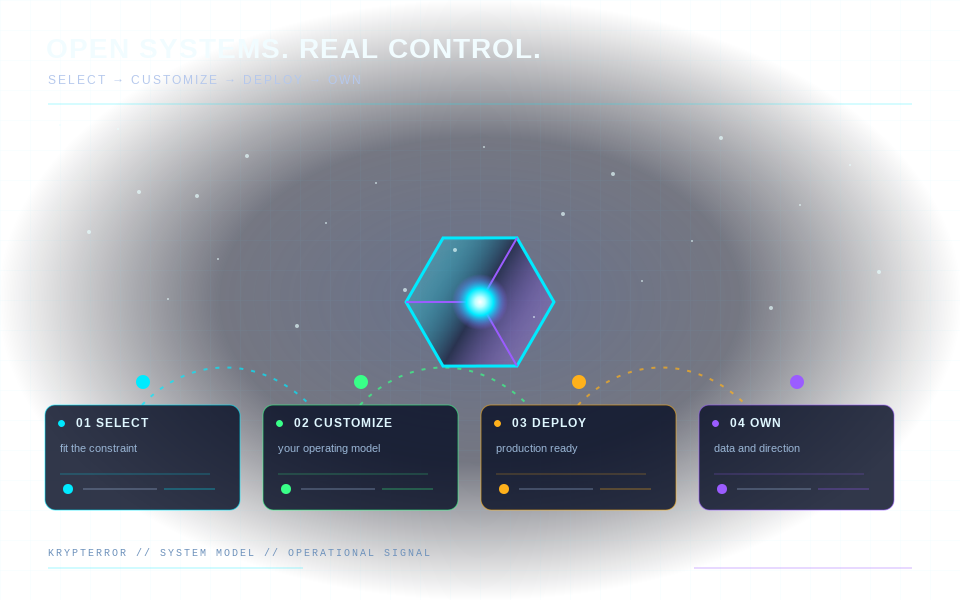
- We inventory each tool, its functions and costs, who depends on it, and which systems are business-critical.
- We select by constraint in this order: data sensitivity, integration requirements, operating capacity, expected growth and compliance. Popularity does not determine suitability.
- We migrate and deploy on infrastructure you control, using verified data exports, a rollback path and production hardening.
- We integrate the new system with retained software, including your own product.
- We hand over documentation, runbooks and credentials, and train the people responsible for operation.
Which subscriptions can actually be replaced?
It depends on the category: CRM, helpdesk and shared inbox, email and lifecycle messaging, analytics and product metrics, billing flows, identity and access, and internal tooling. Selection runs by constraint — data sensitivity, integration requirements, operating capacity, expected growth and compliance — rather than by popularity.
Which subscriptions stay?
Any that are genuinely cheaper than owning the system for the way your company works, and any category where a regulator requires a certified vendor, the open-source option is immature, or nobody in the company can take responsibility for a server. We identify those constraints before you commission a build.
What does hosting cost us?
Owning software shifts spending from licenses to operations: hosting for one or two servers sized to the workload, maintenance and patching, backups with tested restores, monitoring and alerts, and a named person responsible for operation. A useful proposal makes those obligations explicit before the work starts.
Who maintains it after handover?
Your team can, using the documentation, runbooks and credentials we hand over, and we train the people responsible for operation. If you want a support agreement afterward it is a separate purchase, not a condition of the handover.
How does this connect to automation and AI agents?
The same ownership terms apply beyond the subscription stack. Agents follow the same ownership approach: an open-source runtime on a Linux host, a separate user account and files you own. Model selection is configurable, whether open-weight through hosted inference, self-hosted or a frontier API, reducing dependence on a single provider. If you later want the work automated on top of these systems, that is business process automation. Where AI has a genuine role in the process, we integrate it on the same terms. See AI agents: integration and management. The category map of what can be owned instead of rented is software you can stop renting.
Tell us which manual process you want to improve. We will assess the requirements and scope an automation project.
Contact us today